AI writes your firmware.
Then the loop goes dark.
In development
The AI-native power analyzer for embedded hardware. It plugs into the computer your agent already runs on.
The loop is open
In software the loop is closed: an agent writes code, runs the test, reads the result and goes again. Point the same agent at hardware and it can edit the firmware and flash the board, but it cannot find out what the board then did.
So a human reads the meter and types the number back. That human is the loop.
A power analyzer your agent can drive
PowerBench AI powers the board, measures what it draws, and hands the number back over a local interface, on the same computer the agent runs on.
Three parts: a hub on your bench with the analyzer and a programmable source built in, the PowerBench app on your computer, and pods that add channels when you need them. The hub plugs in over USB. The app shows the trace, keeps the recordings and gives your agent the way in.
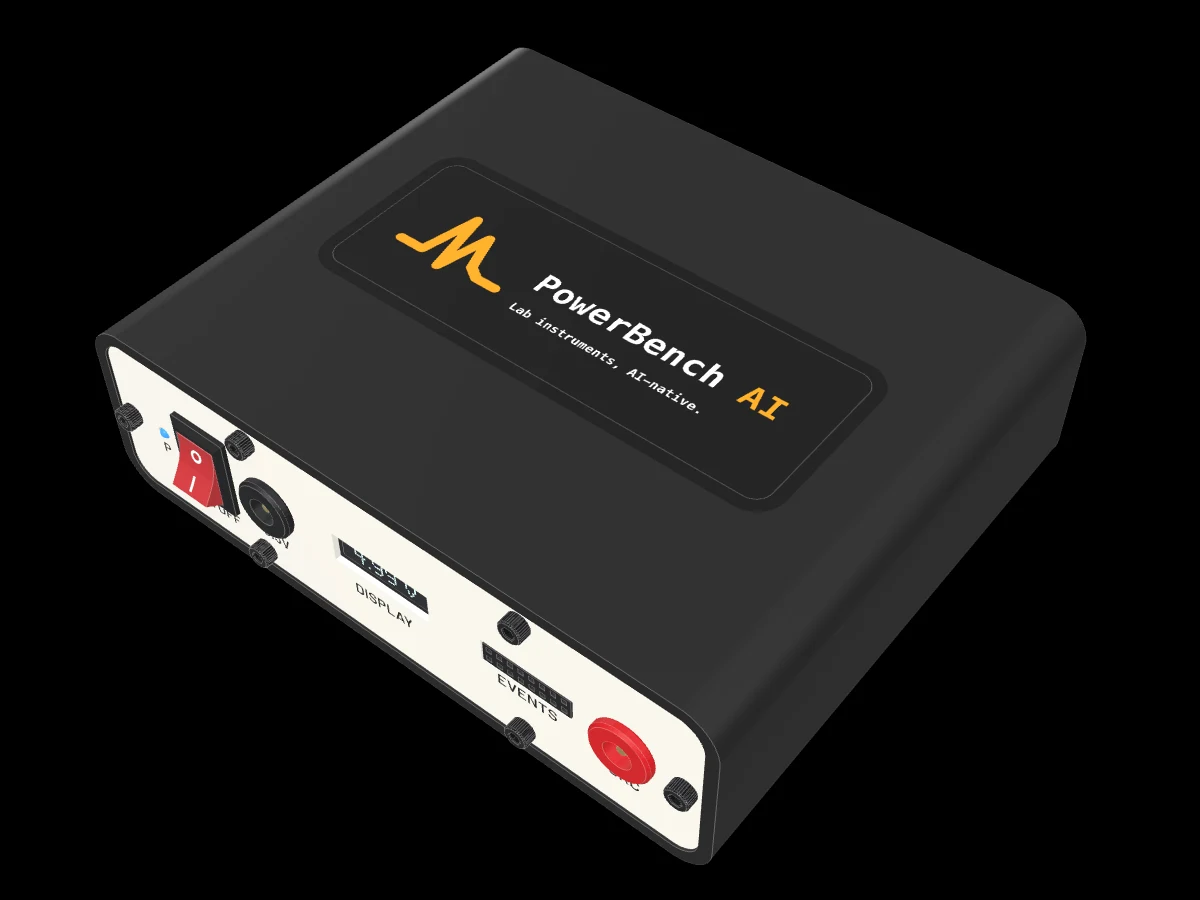
Power analyzer specifications
One analyzer, one source, one interface. Full specifications.
Why nothing else does this
A power monitor that only measures is blind to everything around it. A supply, a load, a meter and a scope cost as much as a used car. Both were designed for a human to read, and neither has an interface the agent writing your firmware can use. The interface is the part that is new.
What the loop does for you
Get the sleep current under spec. The reflash-and-measure loop runs without you.
Catch the transient you would otherwise miss. The sleep floor and the burst sit in one recording.
Make power a regression test. Catch the commit that cost 200 µA on the day it lands.
In development. We will email you when it ships.