Your bench is six boxes
that cannot talk.
In development
A supply, a load, a meter, a scope, a counter, and whatever you borrowed this week. Each with its own screen, its own mains lead, its own idea of what ground means.
What the pile actually costs you
Space: six instruments occupy the bench whether you are using one or all of them.
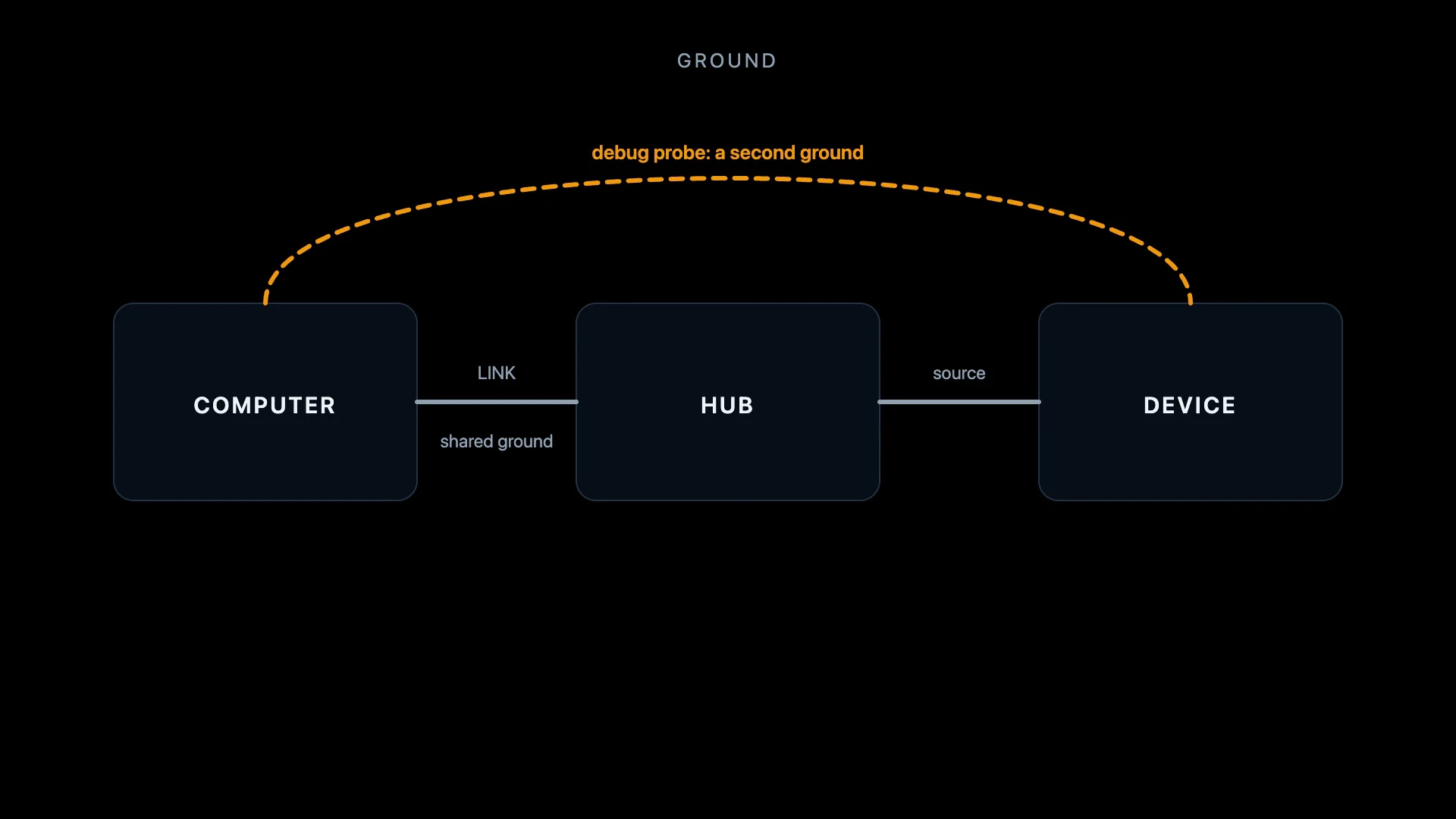
Ground: every mains-powered instrument ties its input to earth, so two of them on one circuit make a loop, and that loop is now part of your measurement.
Data: the numbers are on six displays. Getting them into one place means reading them off and typing them in, which is why most benches never produce a dataset.
One hub, your computer, and pods that float
You already own the best screen, disk and processor on your desk: the computer you write firmware on. The hub does not try to compete with them. It carries only the analog, the source, the radio and a small status display, and the PowerBench app on your computer does the rest.
Each pod is one clean analog problem on its own battery, so it floats, and it can be better at its job than the same function buried in a multi-instrument box. The parts and their numbers are on the product page.
Who this is for
Embedded engineers whose firmware is already being written with an agent, and whose power budget is a ship or no-ship number. A bench that keeps its measurements on your computer and speaks one interface is a bench something else can operate. How that works is on the developers page.
In development. We will email you when it ships.